
Cervicogenic Headache: When Neck Problems Cause Head Pain
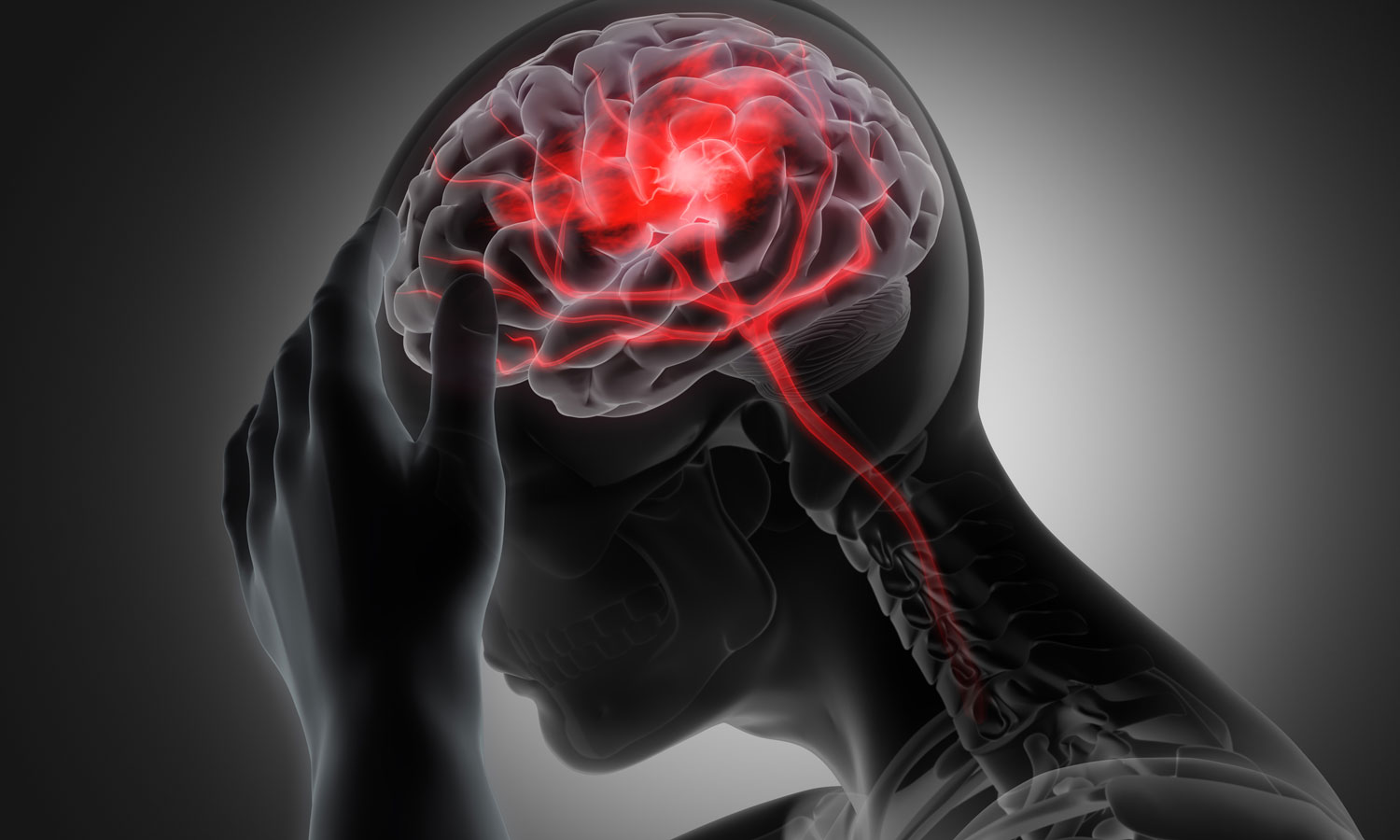
A cervicogenic headache starts in the neck, not the head. If you have spent years being told it is migraines while the medication never quite works, that sentence may be the first thing that matches what you feel.
Pain that begins under the skull and creeps forward is easy to mislabel. Patients do it, and so do charts. Here is how to tell it from a migraine, what causes it, and which treatment options have evidence behind them.
Understanding this type of headache
Understanding cervicogenic headaches begins with one distinction. A primary headache is the problem itself. The other kind is a symptom of something else, and cervicogenic headaches are secondary headaches. The pain is real. The source of pain just sits elsewhere.
The mechanism works in three steps:
- Nerves from the top of the cervical spine carry signals from the spinal joints, discs, and soft tissues of the neck.
- Those signals reach a relay point in the brainstem shared with the nerve that serves your face and scalp.
- Your brain reads the crossed signal as headache pain, which is called referred pain.
Any structure fed by the cervical nerve roots at the first three levels can refer to pain this way. The International Headache Society lists it in the International Classification of Headache Disorders as a chronic and recurrent headache linked to the cervical spine or soft tissues around it.
It is not rare. Estimates put it at 15 to 20 percent of people with chronic headache, most often women, starting in the early forties.
Cervicogenic headache versus migraine and tension headache
Nobody hands you this comparison at a normal appointment. It matters, because the three most common types of headache disorders need different care. Sorting out headache and migraine early saves months.
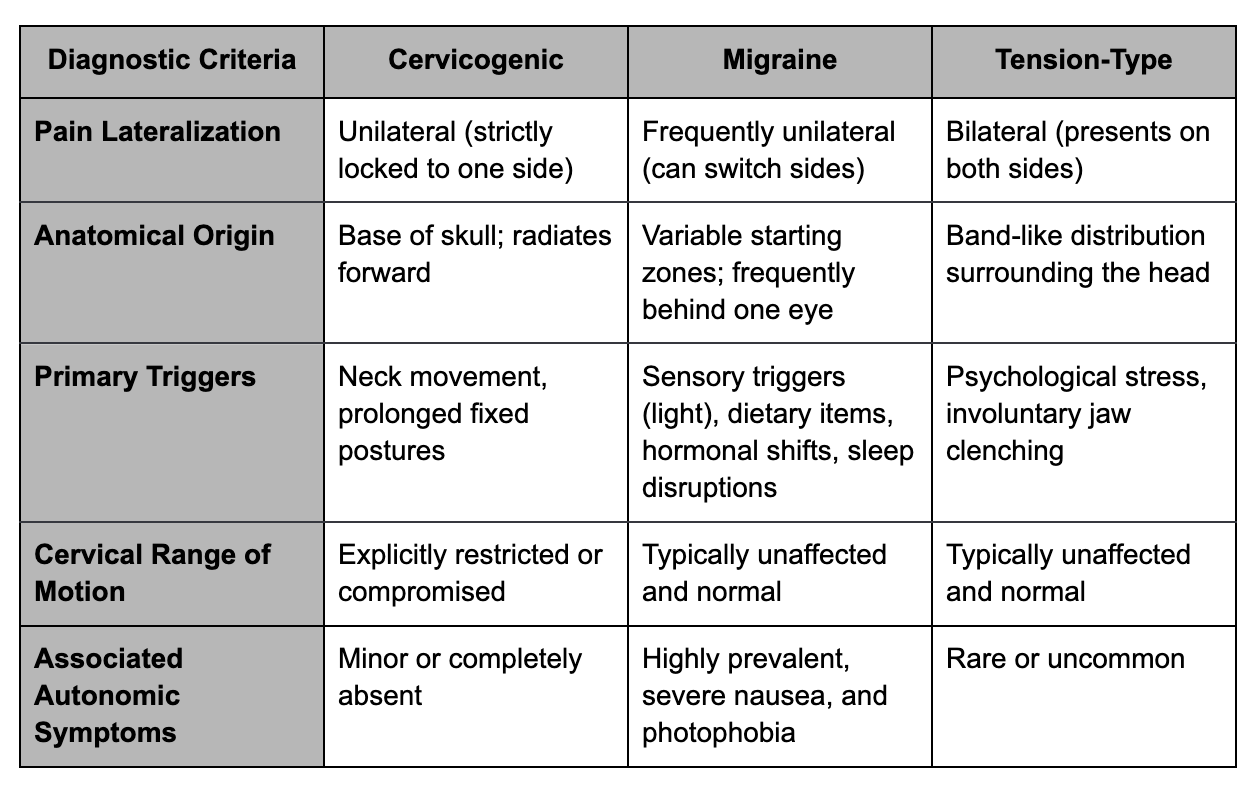
One honest caveat. The features above are not unique to this condition and do not by themselves prove the neck is the cause. They point you toward the right examination, which is a different and more useful thing than a self diagnosis.
Recognizing the symptoms
The symptoms of a cervicogenic headache follow a pattern once you know what to look for.
- Pain that starts in the neck or the back of the head, then travels forward to the eye or temple
- Neck pain in the occipital area that stays on the same side every time
- Reduced range of motion, so checking a blind spot feels stiff
- Muscle tension in the neck and shoulders, sometimes with arm pain that can radiate down the same side
- Neck pain that shows up before the head ever hurts
- Pressing the top of the neck reproduces the exact headache you already have
Three questions worth answering tonight. Does the pain ever swap sides? Does turning your head worsen the pain? Did the pain in the neck arrive first? Two or three yes answers make the neck a suspect.
What causes cervicogenic headache
There is no single cause of cervicogenic headaches. The usual drivers all irritate the same small joints at the top of the spine.
- Joint restriction at the top of the neck, often from posture rather than injury
- Old whiplash injuries and other neck injuries, sometimes from years earlier
- Arthritis in the neck, disc wear, or degenerative disc disease changing how the segments move
- Forward head posture from screens, phones, and driving
That last one is quietly the biggest. Every inch your head drifts forward multiplies the load your neck muscles carry, and a long commute on the 91 does what an eight hour desk day does.
Pain sensitive structures include the facet joints, the ligaments, and the lining of the cervical spine. Any of them can start causing pain that shows up above the eyebrow.
How a cervicogenic headache is evaluated
Because cervicogenic headache can overlap with migraine and other headache disorders, evaluation looks at both your headache pattern and how your neck moves.
A chiropractor may assess your cervical range of motion, areas of tenderness, previous neck injuries, and whether certain movements reproduce or worsen the headache. Imaging such as X-rays or MRI may be recommended when appropriate, but imaging alone does not confirm the condition.
If the findings suggest that the headache may have a cause outside the musculoskeletal system, further medical evaluation may be recommended.
Warning signs that need a medical doctor first
Some headaches do not come from the spine at all. See a physician or go to an emergency room if you have:
- A sudden severe headache that peaks within seconds
- A headache that began after a car accident or a blow to the head
- Fever with a stiff neck
- Weakness, numbness, slurred speech, or vision changes
- A brand new headache pattern after age 50
We screen for artery and joint stability concerns before any hands on work at the top of the spine, and refer out when something does not fit. Ask any provider whether they do the same.
Treatment for cervicogenic headache at Whole Body Wellness
At Whole Body Wellness, treatment for cervicogenic headache begins by looking at how the neck is moving and which musculoskeletal factors may be contributing to the headache. Because the source of pain can differ from one person to another, care is based on the examination findings rather than the headache alone.
Improving cervical movement. When restricted movement is found in the cervical spine, chiropractic care may be used to improve joint mobility and reduce mechanical stress in the neck. The goal is to address neck function that may be contributing to referred head pain rather than focusing only on the headache itself.
Addressing posture and movement patterns. Poor movement habits and prolonged positions can place additional stress on the neck. A digital posture assessment can help identify patterns that may be contributing to cervical strain, while recommendations for daily movement and posture can support progress outside the office.
Building an individual treatment plan. Your first visit includes a chiropractic and orthopedic examination, a digital posture assessment, and X-rays when warranted. You will receive a report of findings on your second visit, along with a treatment plan based on what the examination shows.
The exact approach depends on what is found during your evaluation. If your headache pattern suggests a problem that falls outside the scope of chiropractic care, further medical evaluation may be recommended.
See more: Migraine Headache treatment in Riverside, CA
Preventing cervicogenic headaches
Prevention is mostly about not holding one position for hours. Set your screen at eye level, keep your chin tucked while driving, and stand up every half hour. Strength work for the neck and upper back beats stretching alone.
None of it is dramatic, and all of it protects your quality of life more than another bottle of tablets.
Getting to the real source
A headache may be the loudest symptom while the neck is the real problem. That gap is why people spend years managing pain instead of fixing it.
If your headaches start low, stay on one side, and flare when you turn your head, an examination of the cervical spine is a reasonable next step. Contact us to ask whether your pattern fits.
Frequently asked questions
Can a neck problem really cause a headache?
Yes, because the nerves serving your upper neck and your face share a relay point in the brainstem. Your brain reads the neck signal as head pain, so the ache feels like it sits above your eye.
How do I know if it is a migraine or my neck?
Cervicogenic headaches often stay on one side, start low at the skull base, and worsen with neck movement, while migraine brings stronger nausea and can switch sides. An examination that reproduces your headache from the neck is the practical test.
Can cervicogenic headache pain be cured?
Many people get lasting pain relief once the underlying neck problem is addressed and kept in check with exercise and posture habits. Long standing arthritis or disc change may need ongoing care rather than a fix.
Is it safe to have your neck adjusted for headaches?
For most people yes, provided the provider screens first and the headache has been assessed rather than assumed. A responsible office declines or refers when anything raises concern.

Whole Body Wellness – Riverside Chiropractor
Share this blog:
$49 New Patient Special…
$49 New Patient Special…
1st Visit:
- Initial Consultation
- Chiropractic & Orthopedic Exam
- Digital Nerve, Muscle, & Heart Rate Scans
- Digital Posture Assessment
- Digital X-Rays (if necessary)
2nd Visit:
- Report of Findings with the Doctor
Offer available for new patients only. Website special must be mentioned at time of appointment. Adjustment not included.
or Call
$27 Chiro Exam
Please fill out the form below to schedule an appointment. X-Rays not included.