
Is Spinal Decompression Therapy Safe? Everything You Need to Know

Many of our patients at Whole Body Wellness Chiropractic, you might be wondering: is spinal decompression safe?
The short answer is yes – spinal decompression therapy is considered safe for most patients when performed by trained professionals using FDA-cleared equipment. However, safety isn’t just about the procedure itself; it’s about proper patient selection, professional expertise, and understanding both the benefits and limitations of this innovative treatment.
In this comprehensive guide, we’ll explore everything you need to know about spinal decompression therapy safety, from how the treatment works to who should avoid it.
What Is Spinal Decompression Therapy?
Spinal decompression therapy represents a breakthrough in non-invasive spine treatment. This advanced technique uses controlled traction to gently stretch the spine, creating negative pressure within the disc space that can help herniated or bulging discs return to their proper position.
Think of it like this: when you compress a sponge, it pushes water out. When you release the pressure, the sponge draws water back in. Non-surgical spinal decompression works similarly, creating space for nutrients and healing factors to flow back into damaged spinal discs.
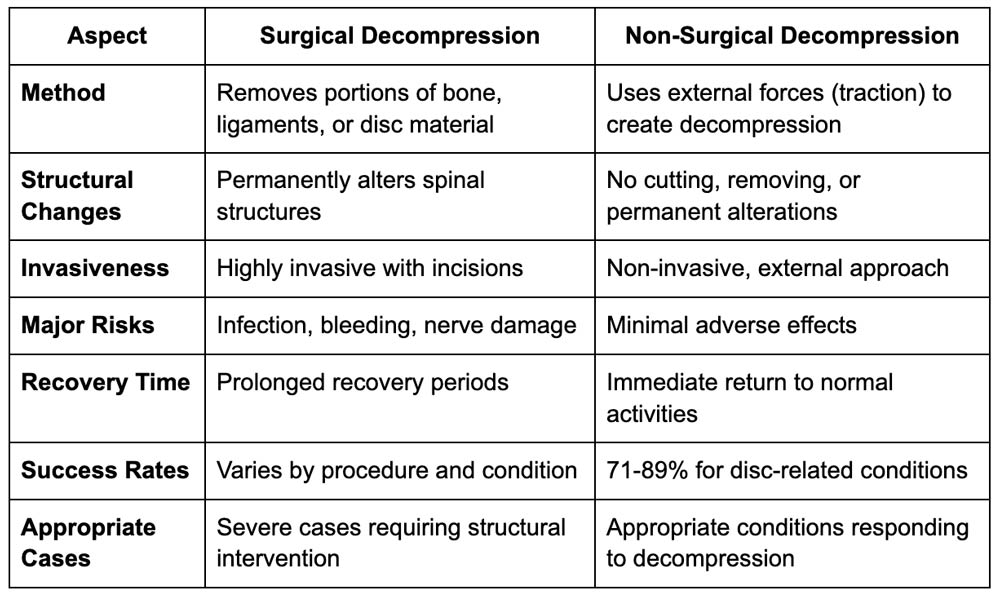
Difference Between Surgical vs. Non-Surgical Decompression
How the Procedure Works
During treatment, you’ll lie comfortably on a specialized traction table while a computer-controlled system applies gentle, intermittent pulling forces to your spine. The treatment feels like a gentle stretching sensation – many patients find it quite relaxing and some even fall asleep during sessions.
The computerized system gradually increases and decreases the traction force, preventing muscle guarding that can occur with manual traction techniques. This precise control allows for deeper decompression while maintaining patient comfort and safety throughout the 20-30 minute treatment session.
Is Spinal Decompression Safe?
Spinal decompression therapy safety has been extensively studied and documented. The overwhelming evidence supports its safety profile when properly administered by qualified healthcare professionals using appropriate equipment and patient selection criteria.
FDA-Cleared Devices and Professional Training
All spinal decompression equipment used in professional healthcare settings must receive FDA clearance as Class II medical devices. This rigorous approval process ensures that the equipment meets strict safety and effectiveness standards before reaching healthcare providers.
At Whole Body Wellness Chiropractic, we use only FDA-cleared decompression systems and maintain the highest standards of professional training. Our team undergoes extensive education in proper patient assessment, treatment protocols, and safety procedures to ensure optimal outcomes for every patient.
What Most Patients Feel During Treatment
One of the most reassuring aspects of spinal decompression therapy is how gentle and comfortable most patients find the treatment. During your session, you’ll typically experience a mild stretching sensation in your spine, similar to hanging from a pull-up bar but much more controlled and comfortable.
Most patients describe the feeling as pleasant and relaxing. Some experience mild muscle soreness after their first few sessions, similar to what you might feel after a good stretch or light exercise. This temporary soreness usually diminishes as your body adapts to the treatment.
Serious adverse effects are extremely rare. A comprehensive review of spinal decompression literature found that less than 1% of patients experience any significant side effects, and most of these were minor and temporary (Choi et al., 2015).
Research Studies and Evidence Supporting Safety
Multiple clinical studies have evaluated spinal decompression effectiveness and safety. Dr. Thomas Gionis’s landmark study involving over 500 patients showed that 86% experienced significant pain reduction with no serious adverse effects reported (Gionis & Groteke, 2003).
Similarly, research published in the Journal of Neurological Research followed patients for two years after spinal decompression treatment and found sustained improvements with no long-term complications (Ramos & Martin, 2007).
These studies consistently demonstrate that when proper protocols are followed, spinal decompression therapy maintains an excellent safety profile while providing significant clinical benefits.
Safety Reassurance Compared to Invasive Alternatives
When considering treatment options for serious spinal conditions, it’s important to compare the safety profiles of different approaches. Spinal decompression vs surgery presents a stark contrast in terms of risk and recovery.
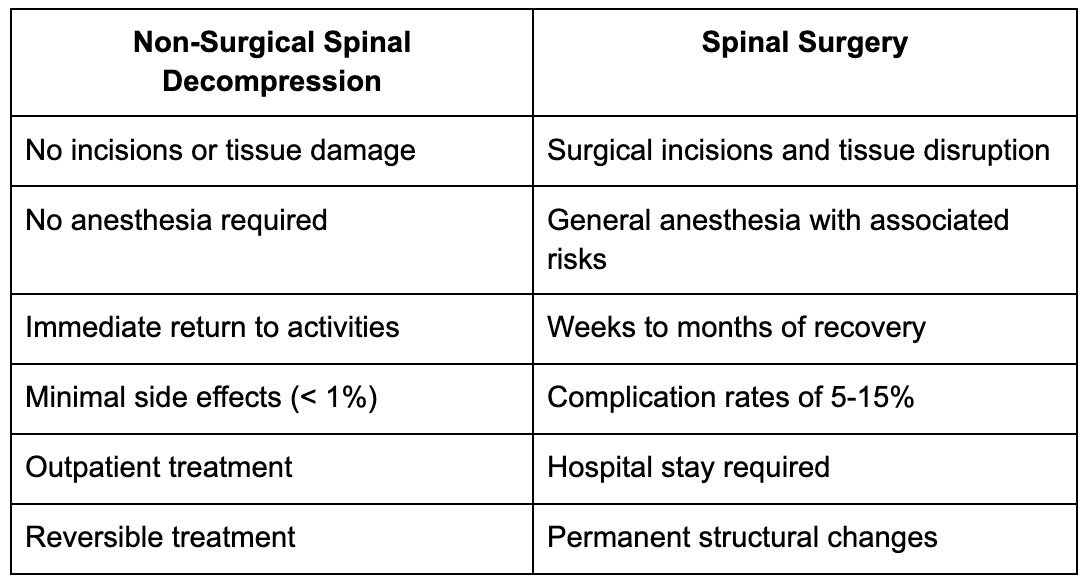
This comparison clearly illustrates why many healthcare providers and patients prefer to explore non-surgical options before considering more invasive procedures.
Who Should Avoid Spinal Decompression?
Contraindications: When Decompression Isn’t Appropriate
- Fractures represent an absolute contraindication to spinal decompression. The traction forces involved could potentially worsen fractures or interfere with healing.
- Tumors in or near the spine also preclude decompression therapy. The mechanical forces involved could potentially cause tumor spread or interfere with cancer treatment protocols.
- Pregnancy is considered a contraindication, particularly in the later stages, due to the positioning requirements and potential effects on the developing fetus.
- Advanced osteoporosis creates concern about the structural integrity of the spine during traction.
Spinal Fusions and Metal Implants
Previous spinal fusion surgery or the presence of metal implants requires careful evaluation. The fused segments cannot move normally, and applying traction forces could create stress at adjacent levels or around hardware.
Who Is a Good Candidate for Spinal Decompression?
Chronic Back or Neck Pain Not Responding to Conservative Care
Patients who have tried traditional conservative treatments like physical therapy, chiropractic adjustments, and medication without achieving lasting relief often find decompression therapy to be the missing piece in their recovery puzzle.
Herniated Discs, Degenerative Disc Disease, and Sciatica Sufferers
These conditions represent the “sweet spot” for spinal decompression therapy. The mechanical nature of these problems aligns perfectly with the mechanical solution that decompression provides.
Take the Next Step Toward Pain Relief
Don’t let chronic back pain, herniated discs, or sciatica continue to limit your life. If you’ve been wondering if spinal decompression is safe and whether it might help your condition, the best way to find out is through professional consultation.
At Whole Body Wellness Chiropractic in Riverside, California, we’re committed to providing safe, effective, evidence-based treatments that help our patients achieve lasting relief.
Contact us today to schedule your consultation and discover whether spinal decompression therapy is right for you. Together, we can develop a treatment plan that addresses your specific needs and helps you return to the active, pain-free life you deserve.
FAQs
Is spinal decompression safe for seniors?
The answer is generally yes. Age alone doesn’t disqualify patients, though we do perform more thorough evaluations in older patients to ensure bone density and overall health can tolerate treatment safely.
Can spinal decompression cause damage?
When properly performed, spinal decompression is extremely unlikely to cause damage. However, like any treatment, results can vary, and some patients may experience a return of symptoms over time.

Whole Body Wellness – Riverside Chiropractor
Share this blog:
$49 New Patient Special…
$49 New Patient Special…
1st Visit:
- Initial Consultation
- Chiropractic & Orthopedic Exam
- Digital Nerve, Muscle, & Heart Rate Scans
- Digital Posture Assessment
- Digital X-Rays (if necessary)
2nd Visit:
- Report of Findings with the Doctor
Offer available for new patients only. Website special must be mentioned at time of appointment. Adjustment not included.
or Call
$27 Chiro Exam
Please fill out the form below to schedule an appointment. X-Rays not included.