
Osteoarthritis: Symptoms, Causes and Treatment Options
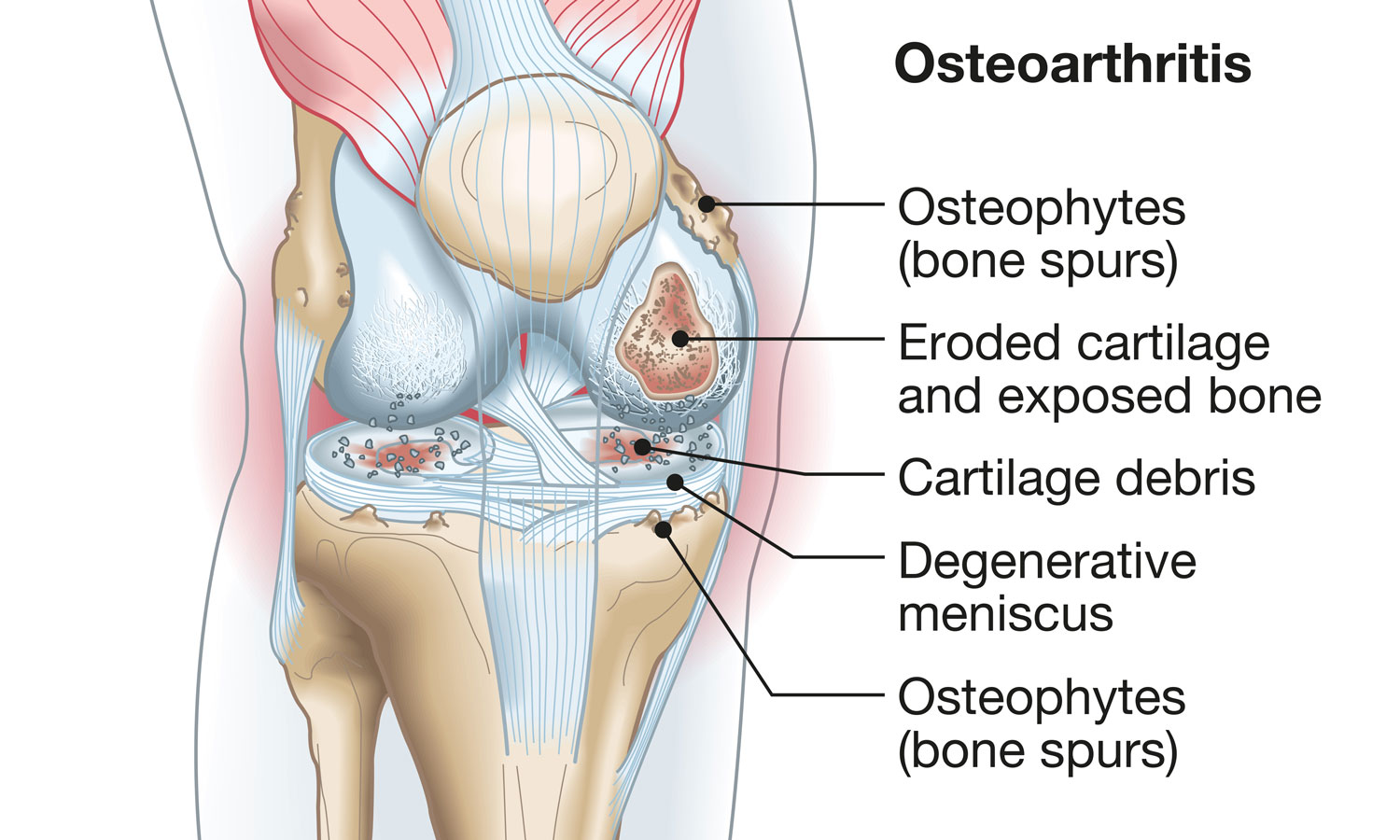
Osteoarthritis is a common joint condition that can cause pain, stiffness, and reduced movement. It often affects the knees, hips, hands, neck, and lower back.
At Whole Body Wellness in Riverside, CA, we look at how joint symptoms affect movement and daily function. Understanding osteoarthritis is an important first step toward finding the right approach to care.
What is osteoarthritis?
Osteoarthritis, often called OA, is the most common form of arthritis. It develops when tissues within a joint change and break down over time.
Healthy cartilage helps the bones in a joint move smoothly. With osteoarthritis, cartilage and other joint tissues can gradually change. The bone and surrounding tissues may also be affected.
Osteoarthritis is more than the gradual loss of cartilage. The condition can cause changes in cartilage, bone and other tissues within the joint over time.
Commonly affected areas include:
- Knees
- Hips
- Hands
- Neck
- Lower back
Some people have osteoarthritis in one joint, while others may have several affected joints.
What are the types of osteoarthritis?
Osteoarthritis may be described as primary or secondary.
Primary osteoarthritis develops without a specific injury or disease being identified as the cause. It often develops gradually and becomes more common with age.
Secondary osteoarthritis develops when another problem has affected a joint. A previous injury, certain joint conditions, or other factors may contribute to these changes.
What are the symptoms of osteoarthritis?
Osteoarthritis often develops gradually, so early symptoms may be easy to overlook.
Common symptoms include:
- Joint pain during or after movement
- Stiffness after resting
- Swelling around the joint
- Reduced range of motion
- Difficulty with everyday activities
- Changes in how the joint moves or feels
Symptoms depend partly on which joint is affected. Knee or hip osteoarthritis may make walking, climbing stairs, or getting out of a chair uncomfortable. Hand osteoarthritis can make gripping or other hand movements more difficult.
Stiffness is often noticeable after inactivity. The joint may feel difficult to move at first and then loosen somewhat as you start moving.
Symptoms can range from mild discomfort to pain and stiffness that make it harder to complete everyday activities.
What causes osteoarthritis?
There is not always one clear cause of osteoarthritis. Several factors can influence how joint tissues change over time.
Age is an important factor, but osteoarthritis is not simply an unavoidable result of getting older.
Common risk factors for osteoarthritis
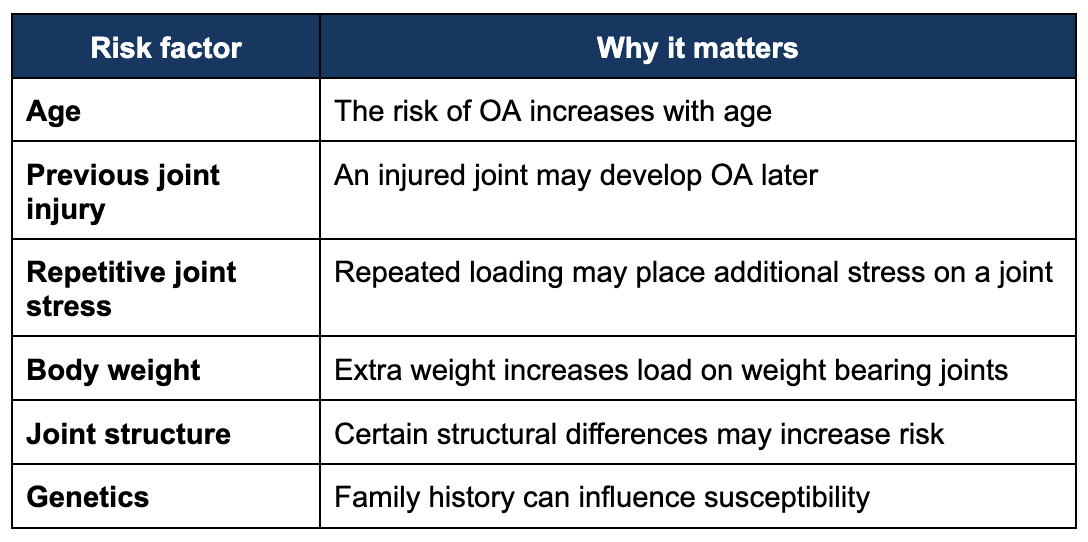
Having one or more risk factors does not mean you will develop osteoarthritis. Some people also develop OA without an obvious history of joint injury or repeated stress.
How is osteoarthritis diagnosed?
Joint pain does not automatically mean osteoarthritis. Other conditions can cause similar symptoms, so an appropriate evaluation is important.
A healthcare provider may review your symptoms, medical history, previous injuries, and how the problem affects your daily activities. A physical examination can assess joint movement, tenderness, swelling, and function.
X-rays may be used when needed to look for joint changes. Blood tests or joint fluid testing may sometimes help rule out other causes of joint pain.
Diagnosis usually starts with your symptoms and a physical examination. X-rays and other tests may be used when needed to evaluate the joint or rule out other causes of pain.
What are the treatment options for osteoarthritis?
Osteoarthritis treatment focuses on reducing symptoms, improving mobility, and helping you stay active in everyday life.
Exercise and daily movement
Regular movement is an important part of osteoarthritis management. Appropriate exercise can strengthen the muscles around a joint and help maintain mobility.
Options may include walking, swimming, cycling, strengthening exercises, and range of motion exercises. Activities should match your current ability and be adjusted if they repeatedly cause a significant increase in symptoms.
Weight management and joint protection
Maintaining a healthy weight can reduce stress on weight bearing joints, especially the knees and hips.
Changing activities that repeatedly aggravate a painful joint may also help. Braces, walking aids, or other supportive devices can sometimes make movement easier.
Heat may temporarily help with stiffness, while cold may help relieve pain or swelling.
Medications and medical treatment
Pain relievers, anti-inflammatory medications, topical treatments, or injections may be recommended depending on your symptoms and overall health.
Severe osteoarthritis may eventually require surgery or joint replacement when other treatments no longer provide enough relief. These options should be discussed with an appropriate healthcare provider.
Chiropractic care and supportive therapies
Chiropractic care cannot rebuild damaged cartilage or reverse osteoarthritis. For some people, conservative care may be considered to support mobility, movement, and physical function.
The appropriate approach depends on the affected joint, degree of degeneration, symptoms, health history, and examination findings.
Exercise and supportive approaches such as therapeutic massage may also be used when appropriate as part of a broader management plan.
Can osteoarthritis be prevented?
Osteoarthritis cannot always be prevented. Factors such as age, genetics, joint structure, and previous injuries cannot always be changed.
However, some habits can help protect your joints and may lower certain risks:
- Stay physically active.
- Maintain a healthy weight when appropriate.
- Use proper protective equipment during sports or physical work.
- Avoid unnecessary repetitive stress on your joints.
- Have significant joint injuries evaluated and managed appropriately.
These steps cannot guarantee that osteoarthritis will not develop, but they can support long term joint health.
When should you see a healthcare provider for joint pain?
Consider getting evaluated when joint pain or stiffness persists, becomes worse, or starts interfering with walking, work, sleep, exercise, or everyday activities.
Joint symptoms that develop after an injury may also need evaluation if they do not improve as expected.
Seek prompt medical attention if a joint becomes very red, hot, or severely swollen, especially if you also have a fever or feel unwell. These symptoms can have causes other than osteoarthritis.
Managing osteoarthritis at Whole Body Wellness
Managing osteoarthritis involves more than looking at changes on an X-ray. How comfortably you move and function in everyday life also matters.
At Whole Body Wellness, we evaluate how musculoskeletal symptoms relate to mobility, movement, posture, and overall function. When appropriate, care may include chiropractic care, supportive therapies, and movement recommendations.
When symptoms suggest that another type of medical evaluation is needed, that should take priority. You can contact us to discuss your symptoms and whether conservative care may be appropriate.
Frequently asked questions about osteoarthritis
Is osteoarthritis the same as arthritis?
No. Arthritis is a broad term for conditions that affect the joints. Osteoarthritis is one specific type of arthritis and is the most common form.
Does osteoarthritis get worse with age?
The risk of osteoarthritis increases with age, but OA is not simply an unavoidable part of aging. Joint injuries, genetics, body weight, joint structure, and other factors can also affect risk.
Is walking good for osteoarthritis?
Walking can be a useful low impact activity for many people with osteoarthritis. It may help maintain mobility and physical function, but the amount of activity should match your symptoms and abilities.
Can a chiropractor help with osteoarthritis?
Chiropractic care cannot cure osteoarthritis or rebuild damaged cartilage. For appropriately selected patients, conservative chiropractic care may help support mobility, movement, and function as part of a broader management plan.

Whole Body Wellness – Riverside Chiropractor
Share this blog:
$49 New Patient Special…
$49 New Patient Special…
1st Visit:
- Initial Consultation
- Chiropractic & Orthopedic Exam
- Digital Nerve, Muscle, & Heart Rate Scans
- Digital Posture Assessment
- Digital X-Rays (if necessary)
2nd Visit:
- Report of Findings with the Doctor
Offer available for new patients only. Website special must be mentioned at time of appointment. Adjustment not included.
or Call
$27 Chiro Exam
Please fill out the form below to schedule an appointment. X-Rays not included.