Scoliosis in Children: Signs Every Parent Should Watch For

Many parents do not notice scoliosis in a child at first, because it can come on slowly and cause no pain for a long time.
Early clues like one side sitting higher, a change in the way your child stands, or a slight curve in the back are easy to miss. At Whole Body Wellness Chiropractic, we help families read these signs early and explore gentle care that protects a healthy back as your child gets older.
What is Scoliosis?
Scoliosis is a condition where the spine curves sideways instead of staying fairly straight when you look at it from behind.
A small curve may cause no trouble at all, while a larger curve of the spine can affect balance, movement, and the way the body lines up over time. It usually appears during childhood or the teenage years.
Types of Childhood Scoliosis
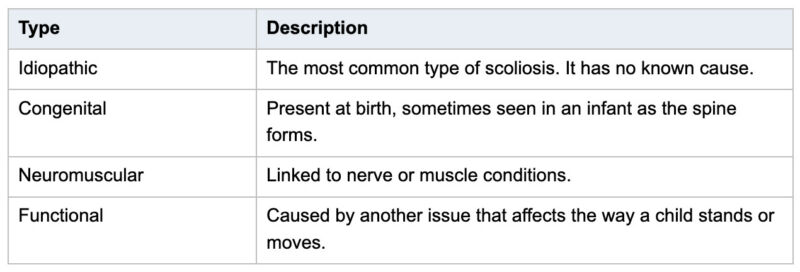
For most families, idiopathic scoliosis is the form picked up during a routine exam or a school screening.
See more: Can Children Have Poor Posture Too?
Signs Every Parent Should Watch For
Children change quickly as they grow, and a curvature can move faster during these stretches. Catching it early lets families keep an eye on the back and step in before things progress. Parents are usually the first to spot a change in how their child looks or stands, often months before any routine screening.
Small changes in posture, body alignment, or the way clothes fit can provide important clues that a spinal curve may be developing.
Uneven Shoulders
One of the earliest and most noticeable signs of scoliosis is uneven shoulders.
You may notice that one shoulder sits slightly higher than the other when your child is standing naturally. Shirt collars may also appear uneven, even when clothing fits properly.
This happens because the spine is beginning to curve, causing the upper body to shift out of balance. In some children, the difference is very subtle at first and only becomes noticeable in photographs or when standing directly behind them.
While uneven shoulders do not automatically mean your child has scoliosis, they should not be ignored if the difference continues over time.
One Hip Appears Higher Than the Other
A spinal curve can also affect the position of the pelvis.
When this occurs, one hip may sit higher than the other, making the body appear uneven. Some parents notice that their child’s pants seem uneven, or that one side of the waistband sits differently.
As the curve progresses, the body may compensate by shifting weight toward one side. This can make standing posture appear unbalanced even when the child feels perfectly comfortable.
If you consistently notice one hip appearing elevated, it may be worth scheduling a professional evaluation.
An Uneven Waistline
The waist often provides one of the clearest visual clues.
When looking at your child from behind, you may notice that the space between the arm and waist appears larger on one side than the other. This asymmetry can become more noticeable during periods of rapid growth.
Because children grow quickly, especially during puberty, changes in waistline symmetry can develop gradually over several months. Parents often recognize the difference only after comparing newer photos to older ones.
One Shoulder Blade Sticks Out More
A prominent shoulder blade is another common sign of scoliosis.
As the spine curves and rotates, the ribs and shoulder blade can shift position. This may cause one shoulder blade to appear more prominent than the other, especially when your child bends forward.
Parents frequently notice this sign while helping a child get dressed, during sports activities, or when the child is wearing a swimsuit.
This change is often easier to see from behind than from the front.
Leaning to One Side
Some children with scoliosis develop a noticeable lean.
Rather than standing evenly over both feet, the body may shift slightly to the left or right. Because this change often occurs gradually, many children are unaware that it is happening.
Parents may first notice the lean in family photos or while watching their child walk across a room.
A persistent lean that does not correct itself should always be evaluated.
Clothes No Longer Hang Evenly
Sometimes clothing reveals scoliosis before parents notice any physical changes.
Shirts may appear crooked. Dress straps may repeatedly slip from one shoulder. Pant legs may seem uneven even when properly sized.
Because clothing naturally follows the body’s shape, changes in spinal alignment can become visible through the way garments fit and hang.
If several pieces of clothing consistently appear uneven, it may indicate an underlying postural change that deserves attention.
The Forward Bend Test
One of the simplest screening tools parents can perform at home is the forward bend test.
Ask your child to:
- Stand with your feet together.
- Bend forward at the waist.
- Let the arms hang naturally.
- While standing behind them, look across the back and rib cage.
If one side of the ribs appears higher than the other, or one side of the back looks more elevated, this may indicate spinal rotation associated with scoliosis.
The forward bend test cannot diagnose scoliosis, but it can help identify children who should receive a professional evaluation.
Can Scoliosis Exist Without Pain?
Yes.
Many children with scoliosis experience no pain at all, particularly during the early stages. Because discomfort is often absent, waiting for pain before seeking an evaluation can delay detection.
Some children may occasionally report:
- Mild back soreness
- Muscle fatigue
- Tightness after activity
- Reduced flexibility
However, these symptoms are not present in every case.
This is why visual signs are often more important than physical complaints when it comes to identifying scoliosis early.
Risk Factors Parents Should Know
Family history is one. Genetics can play a part, and a child with close relatives who had a curve carries a higher chance of the same pattern. Fast growth is another, which is why many cases appear between ages 10 and 15, often in an adolescent going through a big growth spurt. Both boys and girls can be affected, though girls are more likely to see progression of the spinal curve.
When Should Parents Seek an Evaluation?
Book an assessment if you see two sides that do not line up, a lean that stays, a back that looks different on each side, a fresh change in stance, or a relative who has a curve. A provider can take a closer look and decide whether imaging or a follow-up is the right call.
What Happens After a Scoliosis Diagnosis?
When a child is diagnosed with scoliosis, take a breath. Most children with scoliosis never need surgery. The first job is simply finding out how strong the curve is.
Providers confirm a diagnosis with a physical check and an x-ray, then measure the curvature in degrees to see whether it is small, moderate, or more advanced. Because every child develops at a different pace, your child’s scoliosis plan depends on the severity, age, and the growth stage.
Treatment Options
Here are the main types of treatment, matched to how strong the curve is. Most care focuses on monitoring, and bracing is the most common option for a child who is still growing. Your provider will walk you through each step in plain language.
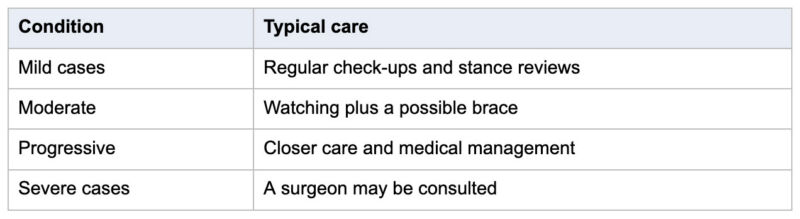
Wearing a brace will not fully straighten the back, but it can keep the curve from getting worse during the growing years.
How Chiropractic Care May Support a Healthy Back
At WBW Chiropractic, we look at how the spine and nervous system work together for your child’s overall wellbeing. For a child whose stance looks a little off balance, our checks find tight spots and areas of stress along the back. Benefits can include easier movement, better body awareness, smoother motion, and support for healthy growth as they grow.
What Happens During a Pediatric Evaluation?
A pediatric evaluation typically includes a review of your child’s health history, growth patterns, posture, and movement. The provider may also look for signs of spinal asymmetry, changes in balance, or other indicators that a spinal curve could be developing.
After the assessment, you’ll have a clearer understanding of your child’s spinal health and whether monitoring or further evaluation may be recommended.
Supporting a Healthy Back at Home
You can build simple habits that protect your child’s spine. Encourage daily movement, since play builds strength and balance. Keep an eye on how your child sits during school and screen time, and ask them to share any soreness or tiredness so nothing gets missed.
A Quick Word on Common Myths
Plenty of parents worry that bad posture or heavy backpacks caused this. They did not. A heavy bag can tire muscles, but it does not bend the back. Scoliosis usually has no clear trigger and forms on its own as a child grows.
Conclusion
Spotting the early signs of scoliosis can make a real difference for a child’s long term back health. Because the early changes are easy to miss, parents play a key role in noticing details such as one side sitting higher, a slight lean, or a body that no longer lines up evenly.
Early action helps families understand the curve and explore the right care. At WBW Chiropractic, our team supports your child through healthy growth with caring checks, a personal plan, and steady support. For more information, call 951-683-9807 or visit wbwchiro.com to schedule a consultation.
Frequently Asked Questions
At what age can a curve appear?
It can show up at any age, but most cases are found in late childhood and the early adolescent stage. Screening for scoliosis every year during growth helps catch changes early.
Is it slouching or scoliosis?
Slouching changes when a child straightens up, while a real curve stays the same no matter how they stand. The forward bend test can help you tell them apart.
Can my child still play sports?
Yes, in most cases. Staying active builds strong muscles and supports easy movement, and your provider can confirm which activities fit your child best.
Does scoliosis need treatment right away?
It depends on how strong it is. A small curve may only need regular monitoring, while a stronger one may call for a brace or, rarely, surgery.

Whole Body Wellness – Riverside Chiropractor
Share this blog:
$49 New Patient Special…
$49 New Patient Special…
1st Visit:
- Initial Consultation
- Chiropractic & Orthopedic Exam
- Digital Nerve, Muscle, & Heart Rate Scans
- Digital Posture Assessment
- Digital X-Rays (if necessary)
2nd Visit:
- Report of Findings with the Doctor
Offer available for new patients only. Website special must be mentioned at time of appointment. Adjustment not included.
or Call
$27 Chiro Exam
Please fill out the form below to schedule an appointment. X-Rays not included.