Can Spinal Decompression Help a Herniated or Bulging Disc?
We see patients every week at our Riverside chiropractic clinic who’ve just been told they have a herniated disc or bulging disc. The first question they usually ask? “Do I need surgery?”
Here’s what we know: many people with disc problems explore spinal decompression for herniated discs and other non-surgical options before considering surgery. But whether this approach is right for your specific situation depends on understanding your condition and getting a proper evaluation.
Bulging Disc vs. Herniated Disc: Know the Difference
These terms get used interchangeably, but they’re actually different problems.
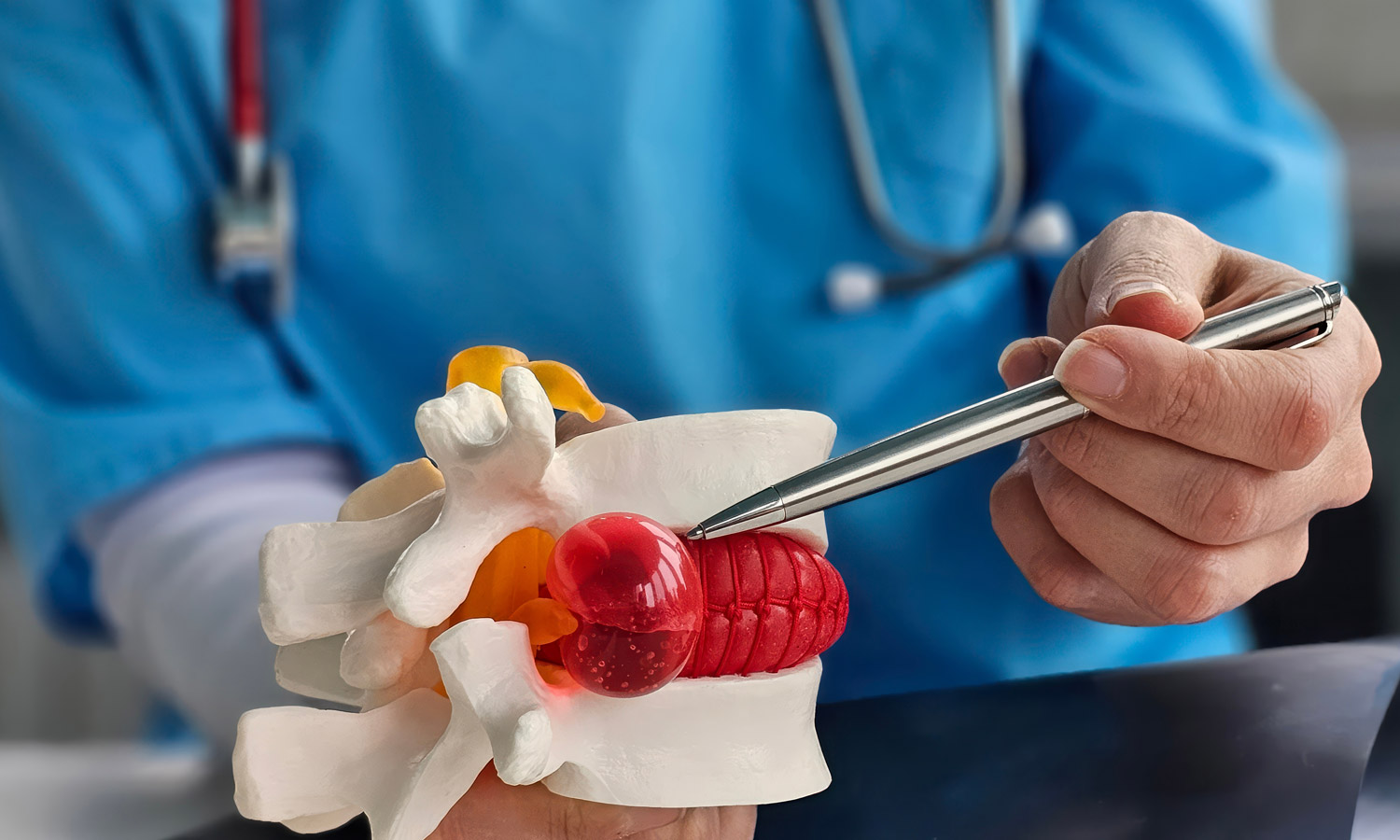
A bulging disc is when the disc material stays mostly intact but pushes outward all around the disc. Think of it like a basketball that’s slightly overinflated – the whole thing expands evenly.
A herniated disc is when the outer layer cracks and the inner gel material squeezes out. This is more like a jelly donut with the filling escaping through a hole in the side.
Both can create pressure on nearby nerves, but herniated discs often cause more dramatic symptoms because the escaped material is directly irritating nerve tissue.
Common Symptoms That Point to a Disc Problem
You might be experiencing one or several of these:
- Lower back or neck pain that won’t go away
- Numbness or tingling in your legs, feet, hands, or arms
- Weakness in specific muscles
- Sciatica (sharp pain radiating down one leg)
- Difficulty sitting, standing, or bending
- Pain that travels farther than your spine
These symptoms can vary widely depending on which disc is affected and how much pressure it’s putting on nearby nerves.
Why You Feel Pain Far From Your Spine
This is something we explain to almost every new patient in our office: your pain location doesn’t always match your problem location.
Here’s why: your spinal nerves branch out like a network throughout your entire body. When a herniated or bulging disc puts pressure on a nerve at your lower back, that nerve still sends signals all the way down your leg. So you feel pain in your foot or calf – not at your spine. The same applies to neck issues that cause arm pain.
Understanding this connection helps explain why treating the disc itself, rather than just the symptom location, makes sense.
How Spinal Decompression Therapy Actually Works
Spinal decompression for bulging discs and herniated discs works on a straightforward principle: reduce the pressure inside the disc, and you reduce nerve irritation.
During treatment, we use specialized equipment to create gentle traction – essentially a controlled stretch of your spine. This does three things:
- Reduces intradiscal pressure. The stretching motion creates space between vertebrae, which can help pull bulging or herniated material back into place.
- Improves nutrient flow. Your discs don’t have blood vessels. They get oxygen and nutrients through movement and fluid exchange. Decompression supports this process.
- Supports healing. By reducing pressure and improving conditions inside the disc, we give your body a better environment to repair damaged tissue.
The key word here is “supports” – we’re not forcing a cure. We’re removing obstacles to healing.
Can Spinal Decompression Help Your Herniated or Bulging Disc?
The honest answer: it may help, and for many patients, it does.
Research from the Journal of the Canadian Chiropractic Association (Sherry et al., 2016) shows that non-surgical decompression can be effective for patients with disc-related leg pain and sciatica. But we’re careful about our language – it “may reduce pressure” rather than “cures.”
Potential benefits include:
- Reducing nerve pressure and irritation
- Improving your ability to move and function
- Decreasing radiating leg or arm pain
- Supporting your body’s natural healing process
- Potentially avoiding or delaying surgery
The catch? Not everyone qualifies, and not everyone responds the same way.
Who Makes a Good Candidate for Treatment?
We typically consider decompression for patients with:
- Confirmed bulging or herniated discs (based on imaging)
- Sciatica or radiating arm/leg pain
- Chronic neck or lower back pain
- Early-stage degenerative disc disease
- Symptoms lasting more than 6-8 weeks with conservative care
- No significant fractures or other contraindications
A proper evaluation includes reviewing your imaging, assessing your posture, checking your spine’s movement, and understanding your full medical history.
When a Different Approach May Be Better
We’d be doing you a disservice if we didn’t mention situations where decompression isn’t the right choice:
- Spinal fractures (structural integrity is already compromised)
- Tumors or severe infections (requiring medical intervention)
- Severe osteoporosis (bone quality issues take priority)
- Spinal fusion hardware in place (can’t be used with decompression equipment)
- Pregnancy (safety protocols restrict treatment)
This is why a thorough evaluation matters. We need to rule out conditions that require different care.
Can Decompression Help You Avoid Surgery?
Many patients explore conservative care – including non-surgical treatment for herniated discs like decompression – before surgery becomes necessary.
This isn’t about saying surgery is never needed. Sometimes it is. But research shows that most disc-related symptoms improve with conservative approaches when given adequate time and the right treatment protocol. Surgery becomes an option if conservative care doesn’t relieve your symptoms after several months or if your condition worsens significantly.
How Long Until You Notice Improvement?
Early changes typically appear within 2-4 weeks – maybe less pain when sitting or improved sleep.
Meaningful improvement usually takes 4-8 weeks of consistent treatment.
Longer-term healing can continue for 8-12 weeks as your disc environment improves and tissues repair.
Consistency matters. We see better results when patients complete their full treatment series rather than stopping early.
What to Expect Before Starting Treatment
Before we ever place you on decompression equipment, we:
- Review your medical history and symptoms
- Perform a detailed orthopedic exam
- Assess your posture and spinal movement
- Order or review imaging (X-rays or MRI)
- Discuss realistic expectations for your specific situation
This preparation isn’t just protocol – it’s how we ensure you’re getting the right treatment for your condition.
See more: How Many Spinal Decompression Sessions Do You Really Need?
Questions to Ask Before Moving Forward
Before starting any treatment, ask us:
- Is my specific disc condition appropriate for decompression?
- What caused my symptoms, and are there lifestyle factors we need to address?
- What realistic outcomes should I expect based on similar cases?
- What’s the plan if I’m not improving after a certain timeframe?
- Are there other complementary treatments that might help?
These questions build realistic expectations and ensure you’re fully informed.
Final Thoughts: Making the Right Choice for You
The goal isn’t just symptom relief. It’s finding the right treatment approach for your unique body and condition.
If you’re dealing with a herniated or bulging disc and wondering about your options, we’re here to help. We’ll evaluate your specific situation and be honest about whether spinal decompression for sciatica and disc pain is appropriate for you.
Ready to explore whether decompression is right for your condition? Schedule a consultation with our team at Whole Body Wellness Chiropractic in Riverside. We’ll review your case and help you understand your options.
Disclaimer: This article is educational in nature and should not replace professional medical advice. Always consult with a healthcare provider before beginning any new treatment.

Whole Body Wellness – Riverside Chiropractor
Share this blog:
$49 New Patient Special…
$49 New Patient Special…
1st Visit:
- Initial Consultation
- Chiropractic & Orthopedic Exam
- Digital Nerve, Muscle, & Heart Rate Scans
- Digital Posture Assessment
- Digital X-Rays (if necessary)
2nd Visit:
- Report of Findings with the Doctor
Offer available for new patients only. Website special must be mentioned at time of appointment. Adjustment not included.
or Call
$27 Chiro Exam
Please fill out the form below to schedule an appointment. X-Rays not included.