Spinal Decompression vs Surgery: Which is Right for You?
If back or neck pain is caused by a bulging disc, herniated disc, or compressed nerve, you may be comparing spinal decompression vs surgery. Both aim to relieve pressure, but one is non-surgical while the other changes the structure of the spine. This guide explains how they differ and what to consider before choosing.
How spinal decompression works and why people choose it
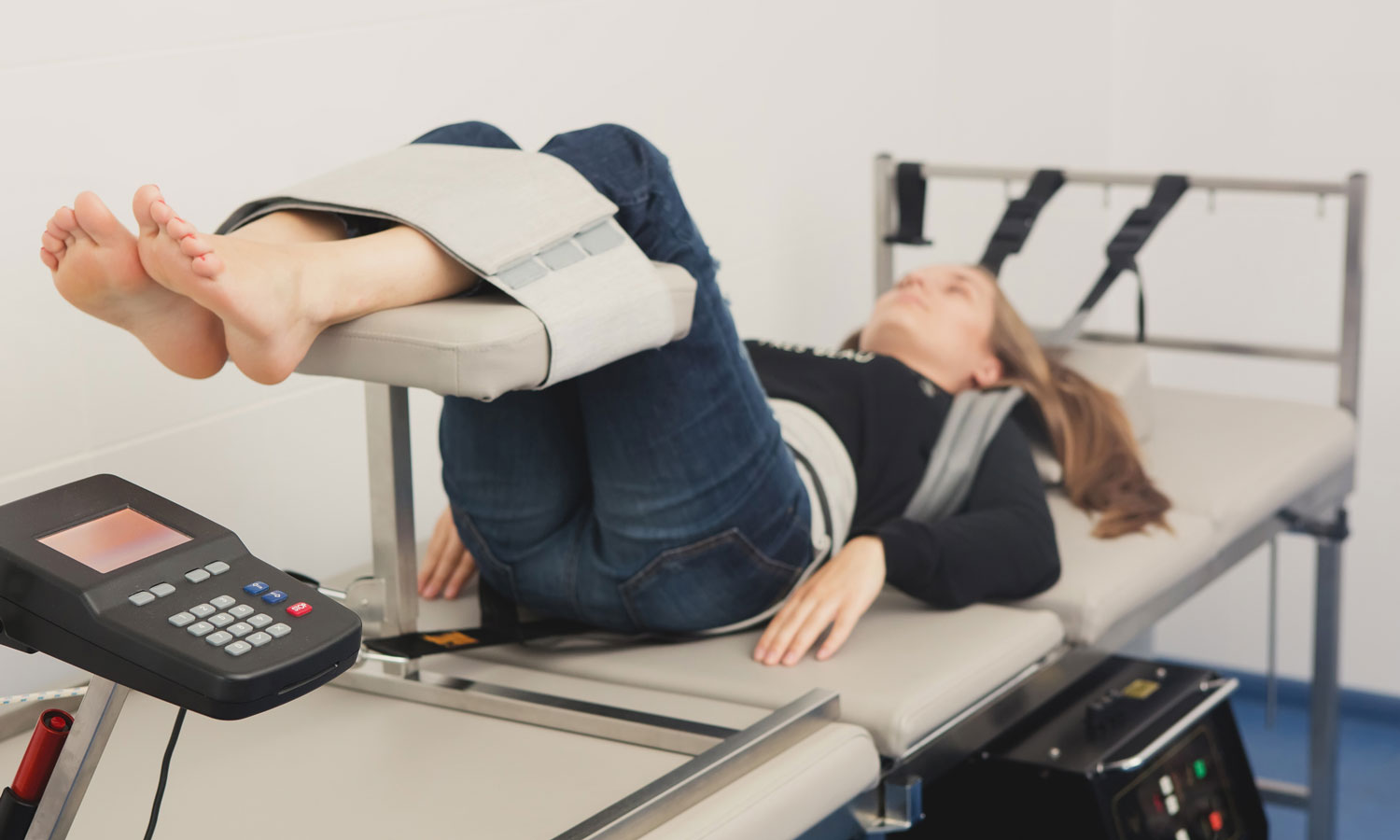
Spinal decompression gently stretches your spine on a padded table. This opens a little more space between the bones. That space eases pressure on your spine and nerves. A gentle pull can help a bulging or herniated disc settle back and take the strain off a pinched nerve.
People pick this route for a few clear reasons:
- It is gentle and uses no surgery or anesthesia, so the risks stay low.
- There is little to no downtime. Most people return to daily activities the same day.
- It usually costs less than an operation and needs no hospital stay.
- It is a drug free option that fits into a normal week.
Most plans use short visits over several weeks. Each session takes about half an hour. People often try this care for a disc problem, sciatica, or pain that has not eased with rest. Many pair it with gentle exercises and posture advice to help the results last.
Surgical options and what they can offer
When gentle care is not enough, or the problem is severe, a surgeon may suggest spine surgery. A few types are common. A discectomy removes part of a damaged disc. A laminectomy removes a small piece of bone to open space around the nerves. Spinal fusion joins two or more vertebrae to stabilize the spine. A surgeon picks the right one based on your scans and symptoms.
- It can bring fast relief when pain and nerve symptoms are strong.
- It can fix structural problems, like spinal stenosis or bone spurs, that gentle care cannot reach.
- For some people, it gives a more lasting fix than nonsurgical care alone.
The trade off is that surgery is more invasive. Most patients feel sore for a few weeks. Full recovery can take months, and it takes longer after a fusion than after a laminectomy. Modern methods can make the cuts smaller and the healing faster than in the past.
What recovery looks like for each
Recovery is one of the biggest differences between the two paths. After decompression, there is no wound to heal. Most people feel fine right away and keep up their normal day. Some feel a little tired after the first few sessions, and that soon passes.
After spine surgery, patients need more time. Many feel better within a few weeks of a laminectomy. A fusion needs longer, because the bones must grow together, so full healing can take several months. Your care team will guide your activity as you slowly get stronger.
Spinal decompression vs surgery: the main differences
Here is a quick side by side look at how the two compare.
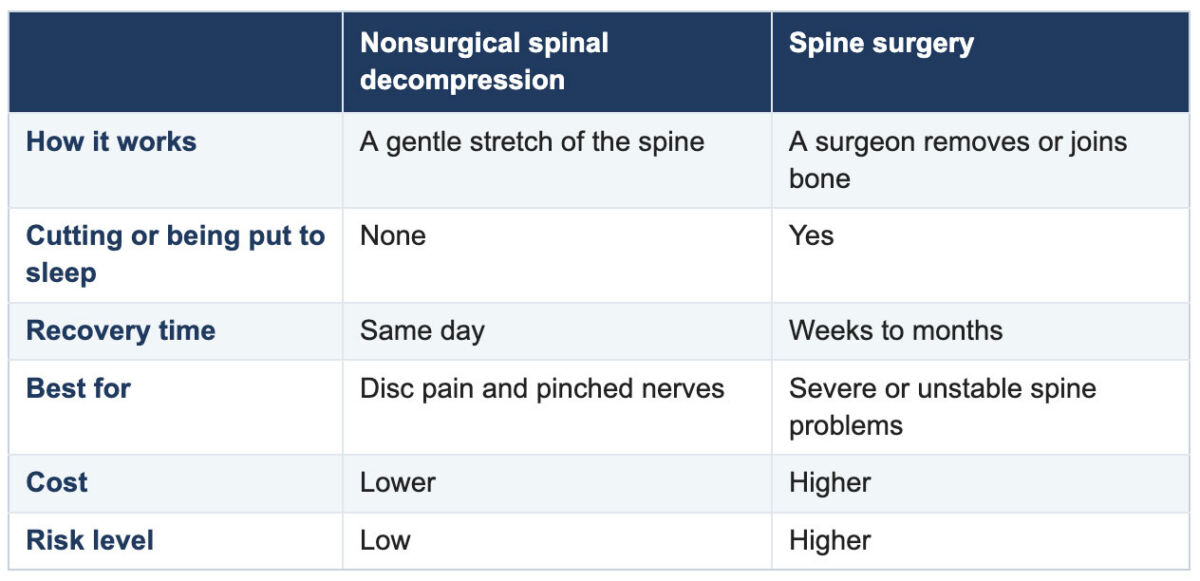
The picture is clear for many people. Start with gentle care, and keep an operation ready for the cases that need it.
Factors to weigh before you decide
The right choice depends on your body and your goals. A few things carry the most weight:
- How bad your symptoms are. Strong pain, weakness, or loss of function points more toward an operation.
- Your health and age. Other health issues can raise surgical risk. That can make gentle care a safer start.
- Recovery time. An operation can mean weeks or months of healing. Decompression usually needs no downtime.
- Cost and coverage. Surgery costs more, and insurance varies, so check both.
- What you have already tried. If gentle care has not helped, surgery moves up the list.
Who is a good fit for spinal decompression?
Spinal decompression tends to suit people with a mild to moderate bulging or slipped disc. It also helps many people with sciatica or a pinched nerve that is not severe. And it can ease ongoing back or neck pain that has not calmed down with other care.
If your scans do not show a serious problem and your strength is normal, gentle care is usually worth trying first. It gives your body a fair chance to heal before you think about an operation. Even if you may need surgery later, trying gentle care first often makes that decision feel clearer.
When surgery is the better choice
An operation moves to the front when there is a real loss of function. It also makes sense when numbness or weakness keeps getting worse, when gentle care and therapy have not helped enough, or when scans show serious spinal instability.
Some warning signs need fast care. Get help right away if you lose control of your bladder or bowel. The same is true if you feel sudden and severe weakness in your legs. That can mean a nerve is badly pinched and needs quick attention.
Conclusion
Choosing between spinal decompression vs surgery gets easier once you see how each one works and who it helps. For many back and neck problems, gentle care is a smart first step, while an operation stays ready for the cases that truly need it. At Whole Body Wellness Chiropractic in Riverside, our team offers nonsurgical spinal disc decompression for herniated and bulging discs and sciatica. Dr. Daniel Mendez can look at your case, tell you honestly whether decompression may help, and work alongside your medical team so you can choose with confidence.
Common questions about spinal decompression and surgery
Is spinal decompression safer than surgery?
Spinal decompression carries less risk because it does not involve cutting or being put to sleep. An operation is still the safer choice for some conditions, so the best option depends on what is causing your pain.
Can spinal decompression fix a herniated disc?
It can ease the pressure and reduce pain for many people with a bulging or slipped disc. Severe cases with nerve damage may still need an operation, so a proper exam matters.
How do I know if I need surgery?
You may need an operation when strong pain does not improve with gentle care, or when weakness keeps getting worse. Sudden loss of bladder or bowel control is an emergency and needs care right away.

Whole Body Wellness – Riverside Chiropractor
Share this blog:
$49 New Patient Special…
$49 New Patient Special…
1st Visit:
- Initial Consultation
- Chiropractic & Orthopedic Exam
- Digital Nerve, Muscle, & Heart Rate Scans
- Digital Posture Assessment
- Digital X-Rays (if necessary)
2nd Visit:
- Report of Findings with the Doctor
Offer available for new patients only. Website special must be mentioned at time of appointment. Adjustment not included.
or Call
$27 Chiro Exam
Please fill out the form below to schedule an appointment. X-Rays not included.